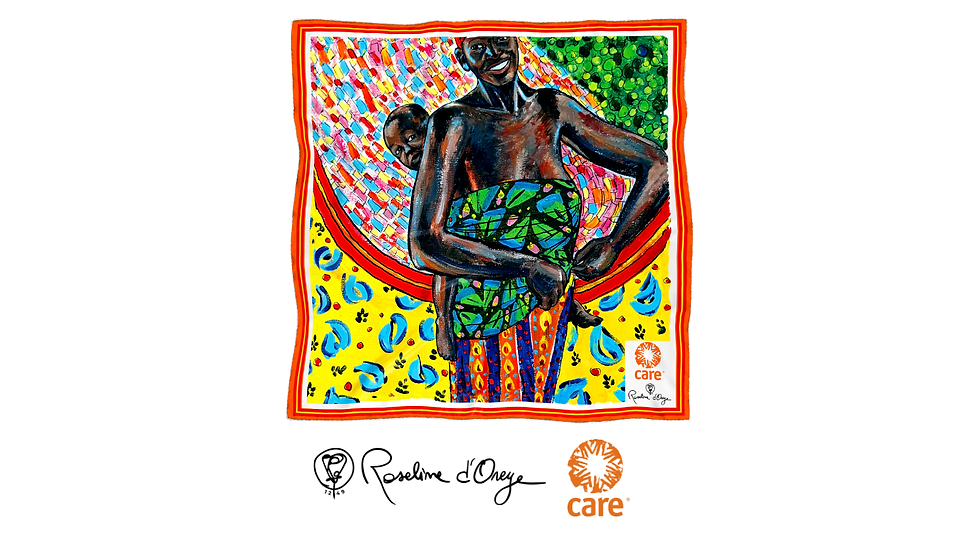
CLIMATE CHANGE IS SEXIST 2.0: Second edition of our call to action
On November 25, 2025, CARE Belgium reiterated its call to action for climate and women's rights during the second edition of its advocacy event “CLIMATE CHANGE IS SEXIST 2.0,” highlighting the impact of climate change on gender inequality. This new edition was once again held at Flagey in Brussels on the occasion of the International Day for the Elimination of Violence Against Women and echoed the debates at COP30.
As climate change continues to exacerbate global inequalities and women's rights suffer a real backlash, this advocacy event reiterated the importance of giving women a voice and a platform in order to combat the impact of climate change in a sustainable and inclusive manner.
The conference, moderated by journalist Lizan Nijkrake, specialized in human rights, brought together policymakers, activists, eco-feminist activists, international organizations and civil society representatives to highlight how climate change exacerbates gender inequalities, while promoting women's leadership in the fight for resilience and climate justice.
The panelists were Princess Esmeralda of Belgium, journalist, filmmaker, climate and human rights activist and honorary president of CARE Belgium; Marie Lecocq, co-president of Ecolo; Els Lecoutere, senior researcher at the CGIAR GENDER Impact Platform and lead of the HER+ gender equality initiative; Karolina Wilberg, policy officer at the European Commission, DG ECHO; Zakia Khattabi, member of parliament and former federal minister of the environment; Chiara Armeni, professor of environmental law (ULB); and Caroline Nieberding, professor of terrestrial ecology (UCLouvain & BEE Lab), discussed the disproportionate impacts of climate change on women, particularly in countries in the Global South, and the importance of including them in climate initiatives for more effective, equitable, and sustainable solutions.
Why is climate change sexist? The answer from our panelists:
Els Lecoutere, Senior Researcher at CGIAR GENDER Impact Platform and Lead of the HER+ Gender Equality Initiative
Karolina Wilberg, policy officer at the European Commission, DG ECHO
Chiara Armeni, professor of environmental law (ULB)
Princess Esmeralda of Belgium, Honorary President of CARE Belgium and journalist, filmmaker, and climate and human rights activist
The problem: Climate Change is Sexist
Climate change has a disproportionately negative impact on women, exacerbating existing gender inequalities. Women, particularly in developing countries, are often the primary caregivers, responsible for providing food, water, and fuel, making them particularly vulnerable to climate change. Women and girls must be at the centre of this renewed ambition. Disproportionately affected by the climate crisis despite contributing least to its causes, they face heightened risks from extreme weather events, displacement, and resource scarcity, and are often excluded from the decision-making processes that shape climate responses (1).
At the same time, women are often at the forefront of climate solutions, leading community-based adaptation, resilience building, and advocacy efforts. Even though their leadership and expertise remain under-recognized and underfunded.
CARE International recognizes this imbalance and is committed to integrating gender equality into climate action. Since its founding in 1945, CARE has consistently prioritized women and girls in its work: this focus is grounded in the belief that empowering women is fundamental for building resilient communities and advancing sustainable development.

International Day for the Elimination of Violence against Women
Climate change also leads to an increase in gender-based violence during periods of instability. For example, during crises, girls in southern countries are often exposed to an increase in school dropouts and forced marriages. It is estimated that 70% of children who drop out of school during periods of drought in Botswana are girls (3). Climate change also threatens the health and, more broadly, the lives of women and girls. In many countries, they are the first to go without meals in the event of food shortages, due to the secondary status assigned to them by sexist social norms. Studies show that they are also the first victims of climate-related natural disasters. During floods, for example, in some contexts, they find themselves trapped because they have not had access to warnings, cannot leave their homes freely, or cannot swim because social norms often prohibit them from learning to do so, unlike boys and men. In Europe, too, the same observation can be made: the heat waves of summer 2022 claimed 56% more female victims (2), confirming that women's health is more severely affected by climate change.
What are the solutions? Ecofeminism?
While climate change poses considerable challenges, women also play an indispensable role in combating it. They are at the forefront of adaptation efforts and lead initiatives to mitigate the effects of climate change in their communities.
Women play a vital role in the fight against climate change. Not only are they the most affected by climate change, they are also at the heart of climate resilience practices. CARE see this all over the world: women are often the primary guardians of natural resources, sharing and passing on their knowledge to their communities and families. They often design and implement innovative, effective, and low-cost solutions.
Women's participation is not only crucial and necessary for building a more sustainable future, it must be inherent in the climate action decision-making process. Still largely unknown, ecofeminism aims precisely to intertwine the struggle for gender equality with that for climate justice. That is why CARE supports women in their projects, not only to help them escape poverty and violence, but also to develop sustainable solutions to climate change.

Closing: Theater performance
The event concluded with a theaterl performance entitled “Regards: Climate Change is Sexist” by the Compagnie qui Pétille theater company. Through a creative and humorous staging, the actors addressed the challenges of climate change and the sometimes incongruous discourse of climate skeptics, while inviting the audience to collectively reflect on solutions for a greener and more sustainable planet. Through the power of theater and improvisation, the troupe explored the links between climate change, gender inequality, and social dynamics. Enriched by interactions with the audience, each scene became a space for dialogue, emotion, and shared reflection.
Resources:
(2) She Grows The Future Flagship Project - CARE Climate Change
(3) Dossier de presse: Climate Change is Sexist: CARE_DP_CLIMATE_CHANGE_IS_SEXIST_V3